Ted Gioia’s thesis that the dominant mode of authoritative communication has permanently shifted — from scripted, top-down oratory to spontaneous, conversational dialogue. The word “scripted” is now an insult. Sitting confers more trust than standing. The era of the teleprompter is over.
This is not a temporary fashion. It is a structural reversal in how authority gets perceived and granted.
The Socratic Irony
Socrates at his trial (399 BC) told the jury he had no skill at making speeches — only the everyday language of common people. He’d never studied rhetoric. He only knew how to speak the truth in plain words.
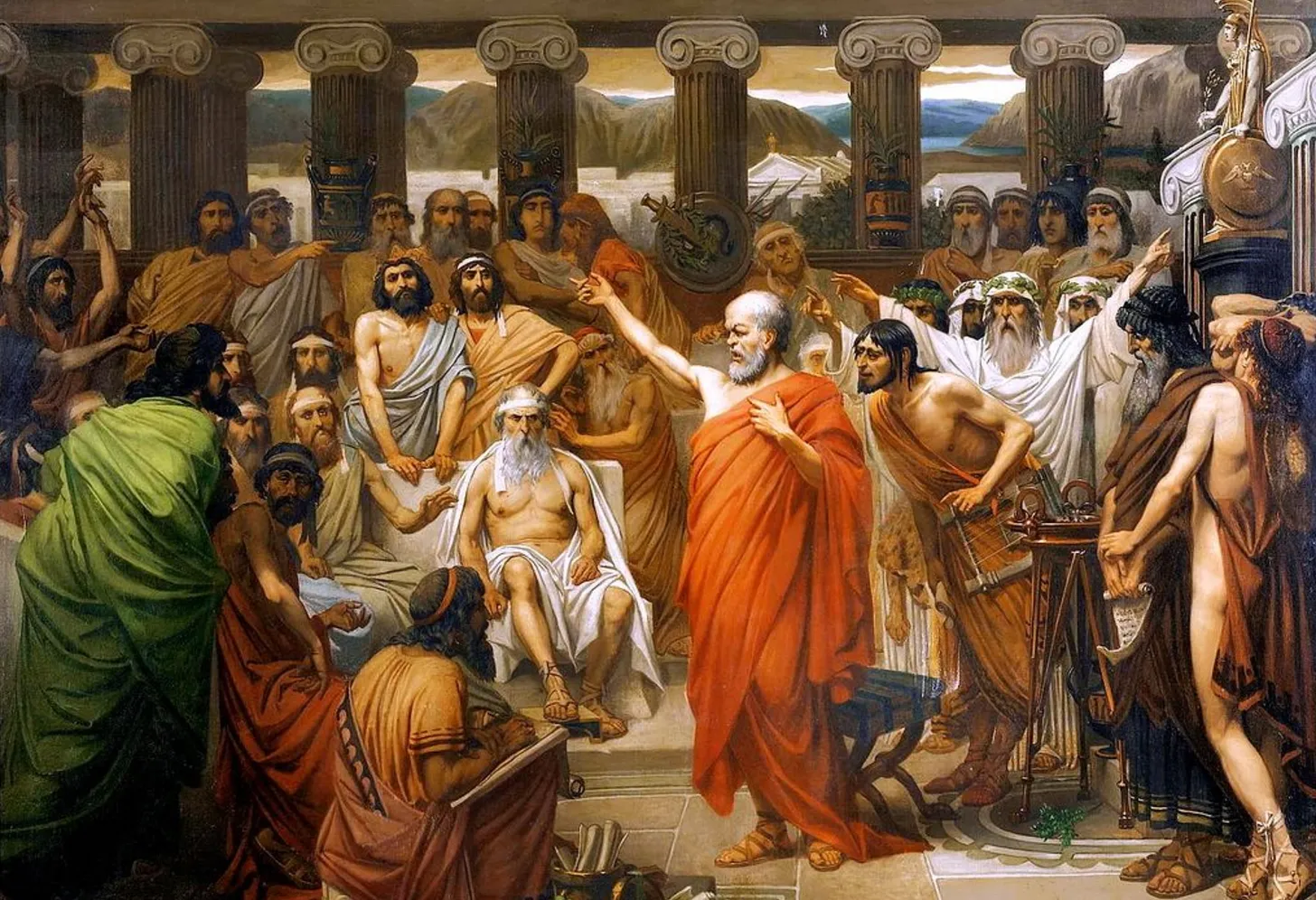
Socrates defends himself — painting by Louis Joseph Lebrun, 1867
That plainspokenness got him executed. Western culture chose the other path: leaders speak, the rest listen. Socrates’ successors — Plato, Aristotle — wrote books and gave lectures. One-way communication became the default architecture of authority for 2,400 years.
Now the reversal: in 2024, the Socratic approach might get you elected President.
The Historical Arc
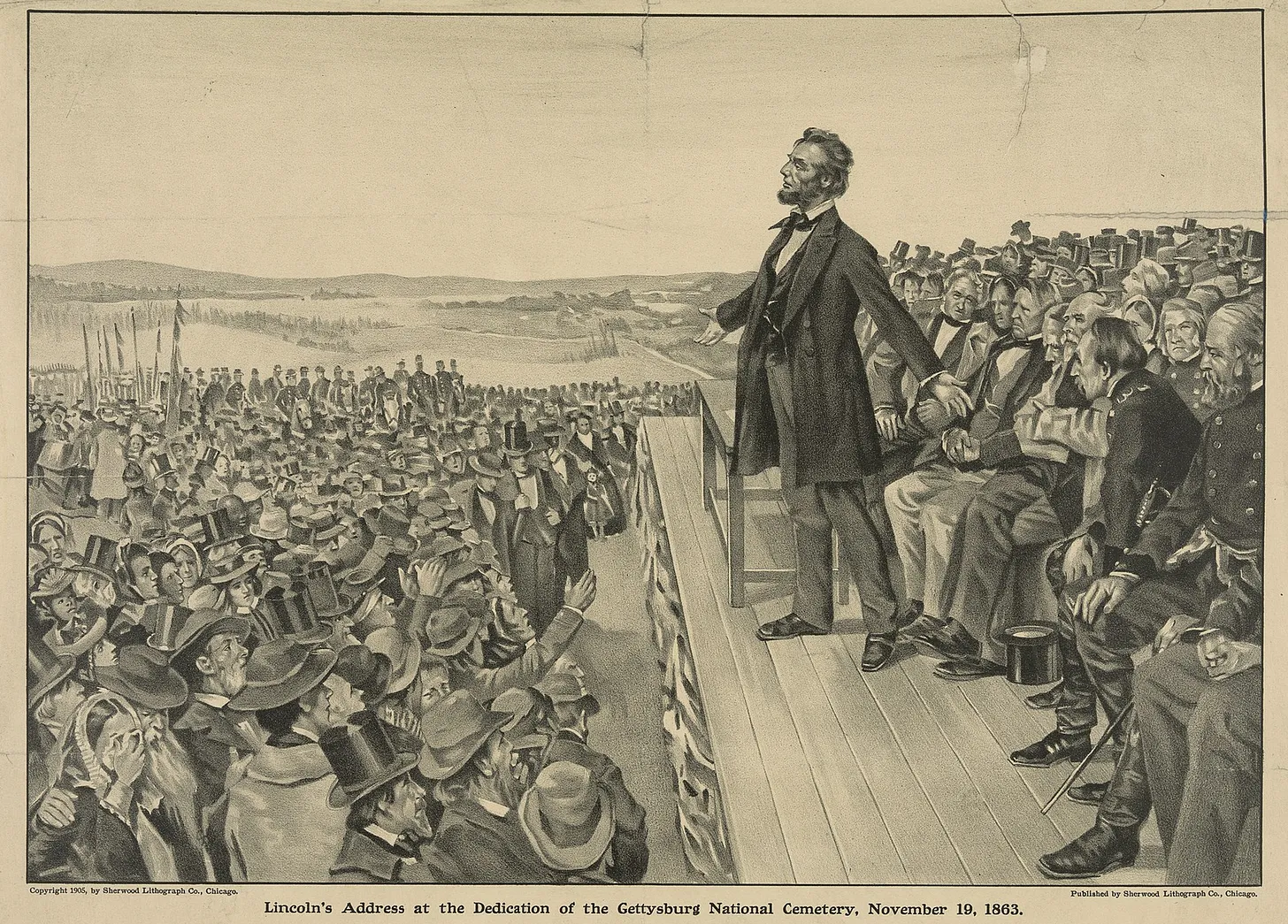
The progression from oratory to conversation:
| Era | Mode | Example |
|---|---|---|
| Ancient Greece | Two-way dialogue | Socrates (executed for it) |
| 1800s–early 1900s | Formal oratory, self-written | Lincoln, Wilson |
| 1921 onward | Professional speechwriting | Harding hires first speechwriter |
| 1940s–50s | Declamatory broadcasting | Walter Winchell |
| 1960s | Scripted TV journalism | Walter Cronkite |
| 1960s (parallel) | Informal talk shows | Johnny Carson’s Tonight Show |
| Now | Long-form spontaneous conversation | Joe Rogan, Substack |
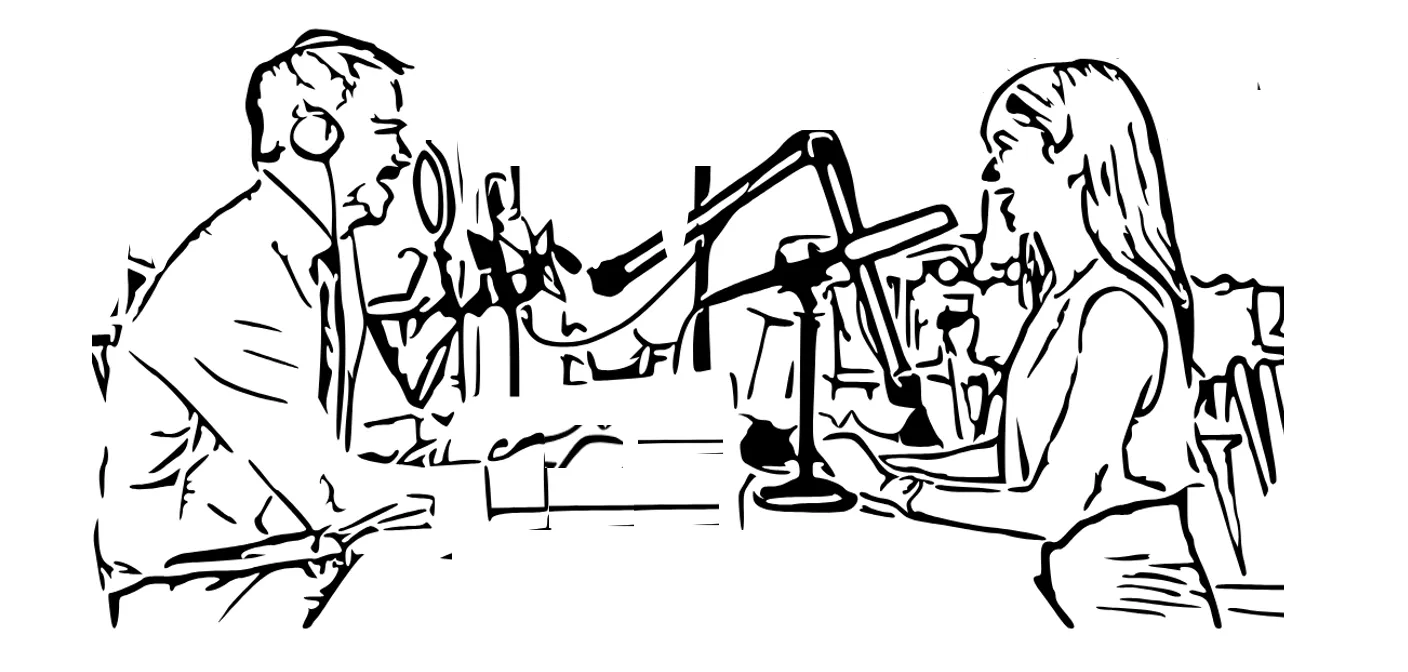
The conventional wisdom said nobody had time for a 3-hour podcast. Joe Rogan proved otherwise. Every media outlet is now scrambling toward conversational formats.
The 6 New Rules
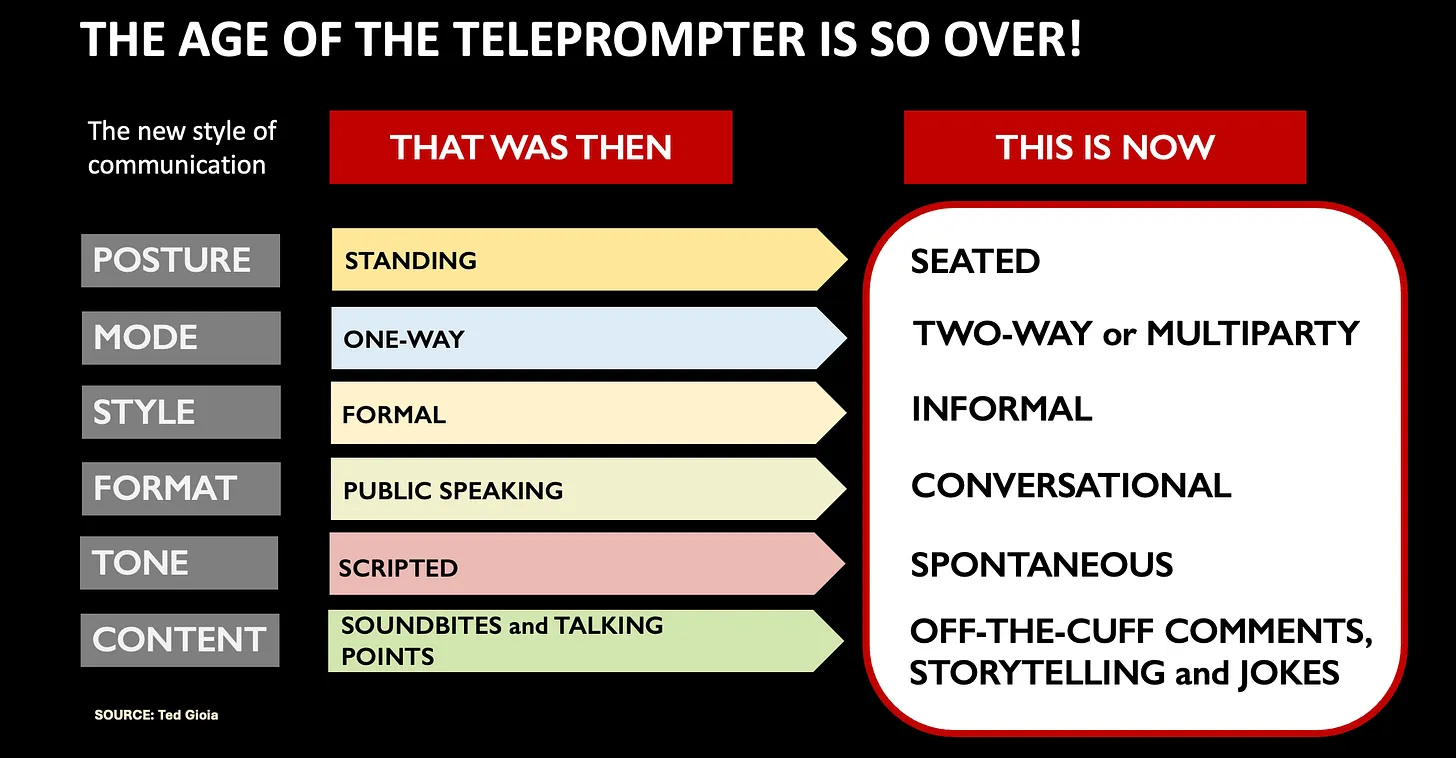
- You gain more trust when seated, not standing.
- Don’t speak at people — speak with them.
- An informal tone is more persuasive now. Even leaders must adjust.
- Conversations have more influence than speeches.
- Spontaneous communications from a personal standpoint are more “real” than scripted, team-crafted messages.
- Soundbites and talking points are less impactful than storytelling, humor, and off-the-cuff comments.
Why Now
Two overlapping causes:
1. Oratory got degraded. Top-down speechifying works when it is rigorous and logical. The last decade turned it into browbeating — insults, taunts, denunciations delivered from a bully pulpit. Girardian mimicry: screaming from one elite elite causes others to scream back. The cycle escalates annually. Most people are simply burned out on hot oratory. Conversational tone feels like relief by comparison.
2. The up-vs.-down revolution. Gioia frames this as more consequential than the Left-vs.-Right divide. The vertical conflict is between established hierarchies and the populations they once commanded. The hierarchies are toppling — in some cases reversing. “Scripted” became an insult because scripts signal hierarchy: someone else wrote this, a team approved it, your authentic self was not present. Spontaneity signals you.
Oratory won’t return until genuine orators emerge who have not corrupted the form. Until then: rambling conversations.
Gioia on His Own Writing
A self-referential note: Gioia noticed that his own Substack writing had become more conversational a few months after launching. He couldn’t explain it at first.
“I only gradually figured out that I was now writing the same way I spoke in private conversation. It was almost as if I’d let my guard down, and was talking off the record, or with a close friend. I didn’t know that could be a writing style. But it felt right, so I kept doing it.”
This is the writer enacting what he’s observing in the culture — and discovering that it works.
Connections to the Rest of the Wiki
The Wordsworth Parallel (New Romanticism): This is almost exactly Wordsworth’s 1800 manifesto — poets should use “language really used by men,” the common people, not the educated elite. Gioia described that as a “missile aimed at Oxford and Cambridge.” The 2024 version: a missile aimed at the teleprompter. The populist turn in aesthetics that Gioia says “never resolves” in Western culture is repeating.
Diagnoses the same collapse (Collapse of the Knowledge System): The death of scripted authority is the communication-layer symptom of the broader collapse. When experts lose credibility and institutions hollow out, the rhetorical styles those institutions relied on become illegible. The talking head falls with the institution.
Operationalizes (Essays as Thinking Tools): Gioia’s conversational Substack writing, Dan Koe’s essay style — both are enacting this shift. The essay-as-thinking-tool works partly because it sounds like someone genuinely working something out, not delivering a pre-packaged conclusion. Conversational authority is the aesthetic of authentic discovery.
Connects to (Fast Content vs Slow Content): Counterintuitively, the 3-hour podcast is slow content — it requires sustained attention, it meanders, it discovers things mid-conversation. It won against the soundbite (fast content) because slow content offers something the algorithm cannot simulate: genuine presence.
Confirms (The Meaning Economy): Scripted content optimizes for polish; conversational content optimizes for presence. The shift in authority toward conversation is the communication market preferring presence over polish — meaning over optimization.
Operational version (How to Speak): Patrick Winston’s 40-year MIT lecture on speaking is, on close reading, the practitioner manual for conversational authority. Don’t read slides. Don’t read notes. Don’t say thank you out of duty. Practise with strangers who don’t already know what you’re trying to say. These are all the moves required to be conversationally authoritative rather than performing scriptedness. Winston was teaching the technique decades before Gioia named the cultural shift; both arrive at the same place from opposite directions — Winston from craft, Gioia from cultural diagnosis.
The Implication for Anyone Who Leads
Politicians, broadcasters, educators, doctors, ministers, coaches, managers — the transition affects anyone who exercises leadership in any group setting. Those who cling to the bully pulpit will erode quickly.
Institutional media will try to fake the conversational style — “a dinosaur pretending it’s a ballerina.” The gap between genuinely spontaneous and performatively spontaneous will be obvious to audiences trained by years of Joe Rogan.
See Also
- How to Speak — Patrick Winston’s installable repertoire for actually doing this in the room
- Write Like You Talk — Paul Graham’s micro-level writing version of the same shift: conversational prose beats formal prose for the same reasons conversational authority beats scripted authority
- New Romanticism
- Collapse of the Knowledge System
- Essays as Thinking Tools
- Fast Content vs Slow Content
- The Meaning Economy
- Epistemic Commons
- Ted Gioia