Ted Gioia’s term for what he considers the most important — and most unreported — story of the 21st century: the simultaneous breakdown of the institutions, practices, and authorities that societies have relied on to produce, validate, and transmit knowledge.
The Core Claim
Major civilizational shifts typically go unnamed until they are already over. The word Renaissance was coined two centuries after the Renaissance began. If the New York Times notices the Buddha, the enlightened one has already left town.
Gioia argues we are living through a shift of that magnitude — one that doesn’t yet have a widely agreed-upon name. His name for it: The Collapse of the Knowledge System.
“The whole entrenched hierarchy of truth and authority gets totally reversed. The old experts and their systems are discredited, and completely new values take their place. The newcomers bring more than just a new attitude — they turn everything on its head.”
The key diagnostic: the ten symptoms are not isolated incidents. They are happening simultaneously across every sector of society that depends on clear knowledge and respected authority.
The Ten Warning Signs
1. Scientific studies don’t replicate.
40%+ of published studies fail to replicate. Fake studies get cited more often than reliable ones. The foundational promise of science — that claims can be validated — is breaking down.
2. Expert distrust at historic intensity.
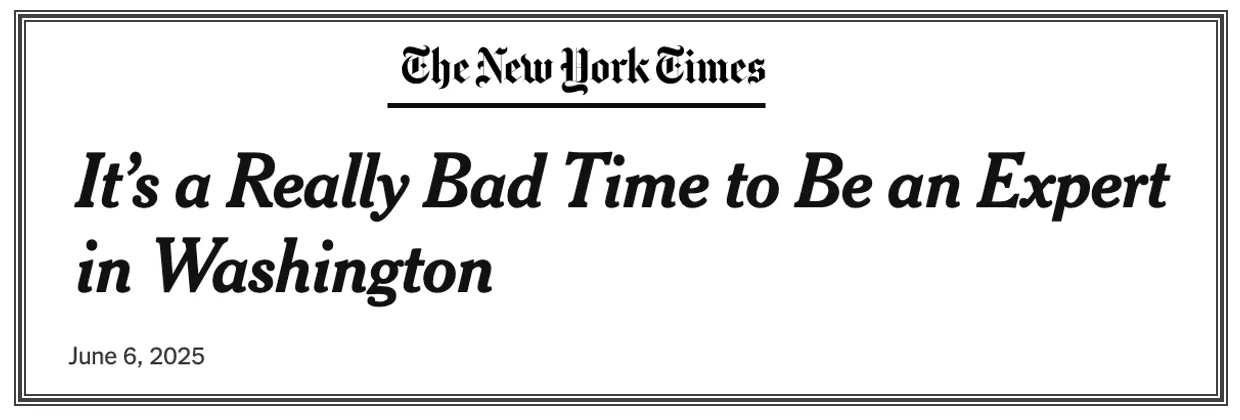
The only experts who retain public authority are blue-collar ones (plumbers, mechanics, stylists). White-collar professional expertise is derided everywhere — including on its home turf. Gioia predicted this a decade ago citing Ortega y Gasset’s *The Revolt of the Masses* (1929); we are now in full crisis mode. In “Who Are the Real Experts Now?” (2025), Gioia offers the underlying diagnosis: institutions failed because they confused credentials with expertise, not because the public became irrational. See Expertise vs. Credentials for the full argument.
3. Career paths for knowledge workers are breaking down.
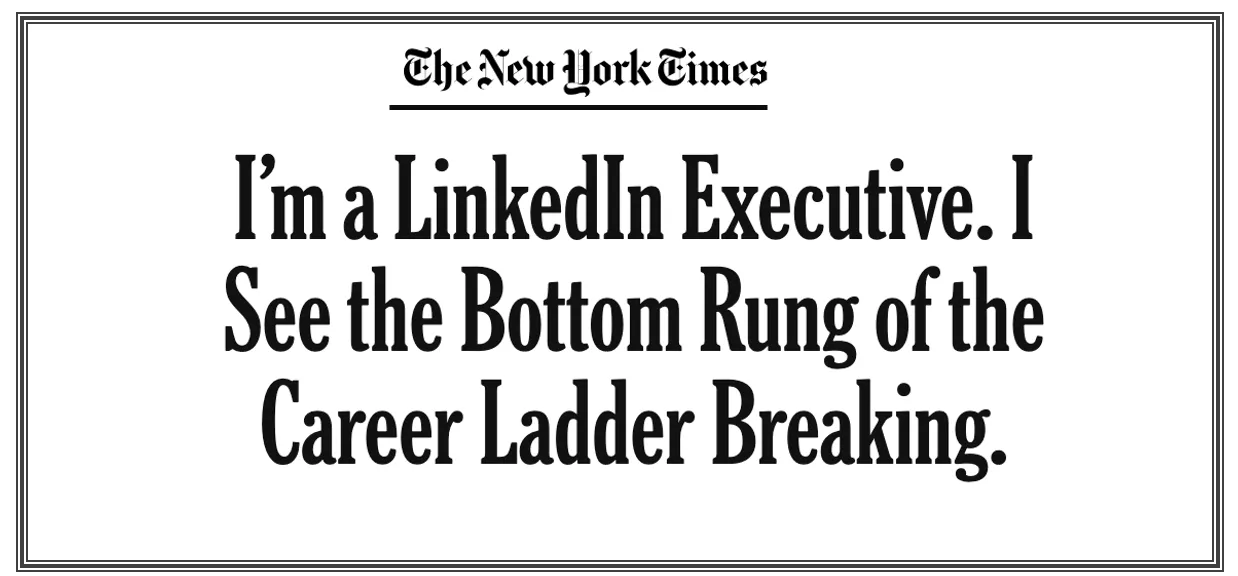
“Learn to code” sounds like a joke now. Art history majors have an easier time finding jobs than computer engineers. Knowledge workers are being fired everywhere. The collapse of the career path is the lived experience of the systemic breakdown.
4. Funding for science and tech research is disappearing.
Major corporations are investing in AI data centers, not scientists. The shift from human-driven R&D to capital equipment investment is enormous. This is not a short-term economic trend.
5. Universities have lost prestige and made enemies of their constituencies.
Tuition costs skyrocketed. Degree values plummeted. Huge bureaucracies disconnected from educational priorities. 25 years of alienating students, academics, and the public has reached a crisis point.
6. Plagiarism is everywhere and taken for granted.
From students to Harvard’s president to corporations. A healthy knowledge system requires honesty and accountability — that baseline assumption has collapsed. By 2025, Gioia is diagnosing this at a structural level in “5 Ways to Stop AI Cheating”: everyone is now cheating via AI in college, and the cheaters get rewarded (a Columbia student expelled for cheating promptly raised millions to turn his system into a startup). His prescription: the Oxford Tutorial System — handwritten exams, oral interrogation, genuine failure — is structurally immune to AI in ways that no plagiarism detector can be.
7. AI is imposed everywhere, and when it hallucinates, authorities take it for granted.
The most alarming fact: the people running the knowledge system accept all the deceit and hallucinations without ethical qualms, anxiety, or apology. The public smells the rot. Gioia’s marketing truism applies: “Nothing is more damaging than a successful launch of an inferior product. Your short-term success ensures your long-term failure.”
8. Science and technology are increasingly used to manipulate and exploit.
Software upgrades users fear. Search engines get worse yearly. Social media grows more psychologically destructive. Surveillance increases, privacy erodes. Active campaigns to ban smartphones are spreading in schools and communities.
9. Scandals are now business-as-usual.
Theranos, SBF, collapsing meme coins, the $1.5B Microsoft-funded AI company secretly staffed by 700 workers in India pretending to be chatbots. These no longer register as scandals — trust was lost long ago.
10. “Fake science” is shouted from all political directions. No one talks about “true science.”
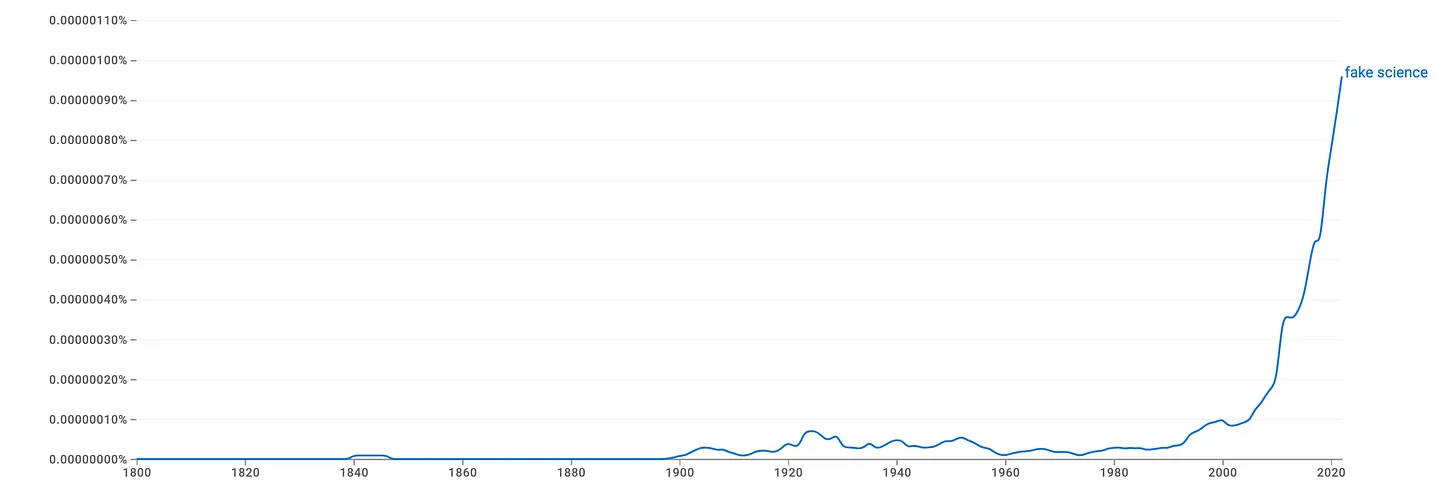
The term “fake science” barely existed in the 20th century — science was considered emblematic of truth. When the knowledge structure collapses, science loses its privileged access to truth. At the final stage, it becomes nearly impossible to distinguish science from propaganda.
Why Experts Can’t Acknowledge It
The diagnosis can’t be openly discussed because admitting the ten symptoms are systemic (not isolated) would put the status of the very people who control the knowledge system at risk. They address each symptom in disconnected ways while being constitutionally unable to name the whole.
This is structurally identical to the insiders at the epicenter of any historical shift being the last to notice it. Tiberius ruled the Roman Empire and never heard the Good News.
What Replaces It
Gioia doesn’t name the successor system definitively — he gestures toward it:
“Symphonies sound as majestic as ever. Philosophy is more necessary than ever. Paintings are still glorious. Great architecture does not collapse. Nature warms the heart. As do poems and epics and myths.”
His four closing theses:
- Science and tech will not disappear, but will face backlash beyond anything in 200 years
- Tech leaders think the next stage is the Singularity — the exact opposite is about to unfold
- Tech now desperately needs what only the humanities and human values can provide
- The new knowledge system will be built on human values; technology will serve it or lose
He explicitly connects this to his article “Notes Toward a New Romanticism” — the humanities-led resurgence as the successor framework. This is also where Gioia’s project as a whole becomes legible: Self-Directed Education, Reading for Wisdom, and the 52-week humanities curriculum are not just personal enrichment — they are preparation for the knowledge system that comes next.
Connections Across the Wiki
This article sits at the intersection of every domain in this wiki:
Connects to Epistemic Commons: The knowledge system collapse is the Epistemic Commons being poisoned at an institutional level — not just social media algorithms, but the entire apparatus of knowledge production (universities, science, journalism, tech).
Connects to Metacrisis: Schmachtenberger would recognize this immediately as substrate consumption — the epistemic infrastructure that society needs to solve its problems is being consumed by the systems creating those problems. The ten symptoms are generator functions operating in every knowledge sector simultaneously.
Connects to The Meaning Economy: When the cold knowledge system collapses, the scarcity it creates is exactly the meaning scarcity Koe describes. The successor system will be built on meaning — which the old system structurally could not provide.
Connects to Essays as Thinking Tools: Gioia and Koe converge here from different angles. Koe says essays are the antidote to the poisoning of the Epistemic Commons. Gioia says the humanities are what the collapsing knowledge system needs and cannot provide for itself. Same diagnosis, same prescription.
Connects to Self-Directed Education + Ted Gioia’s Reading Methodology: The curriculum Gioia spent 50 years building is preparation for the successor knowledge system — one built on human values, humanistic thinking, and the traditions that don’t collapse when the tech bubble deflates.
See Also
- Politics and the English Language — Orwell’s 1946 diagnosis of language decay as political tool; an early case study in knowledge-system poisoning
- Ted Gioia
- Epistemic Commons
- Metacrisis
- The Meaning Economy
- Essays as Thinking Tools
- Self-Directed Education